Get a clearer picture of your water. Explore 21 water-quality points, understand metal and bacteria screening findings, and compare pH and ORP readings with help from our downtown Stuart team. Request an appointment and leave with practical next steps for your home.
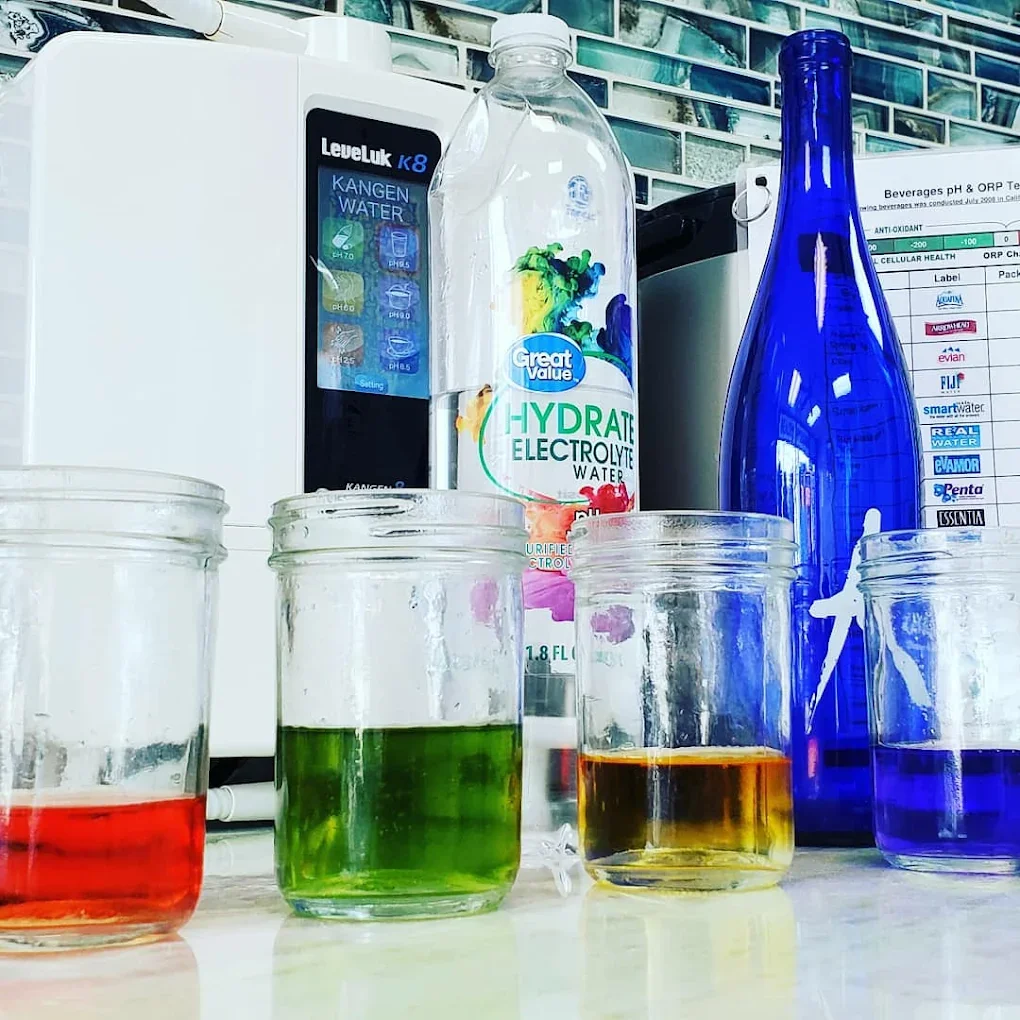
Curious how your tap or bottled water compares with Kangen water? See pH and ORP measurements side by side, discuss your screening results, and leave with a clearer next step for your home. We will explain which questions basic screening can answer and when more specific testing makes sense.
ORP stands for oxidation-reduction potential. A meter reports it in millivolts (mV). Oxidation is the loss of electrons; reduction is the gain of electrons. ORP describes the tendency of substances in a water sample to accept or donate electrons under the measurement conditions.
Reducing behavior is sometimes called antioxidant potential in water chemistry. During your demonstration, we explain that connection and show why pH and ORP describe different properties. An ORP reading is not a measurement of antioxidant benefits in your body, and a more negative number does not automatically mean healthier drinking water.
pH, temperature, dissolved substances and gases, sample handling, and the meter affect the reading. ORP alone does not measure dissolved hydrogen concentration, identify contaminants, or prove drinking-water safety. The value of the appointment is seeing the measurements explained in context, rather than choosing water from a label or a single number.
Get a clearer picture of the water you use every day. Our 21-point screening covers a range of water-quality indicators. Key points include:
We explain what your results indicate, how hardness or disinfectant readings relate to common household water concerns, and which findings warrant closer investigation. ORP is measured separately from the 21-point screening and adds insight into oxidation and reduction conditions.
Screening findings are preliminary, not a certified laboratory analysis or a drinking-water safety certification. A low or negative result does not establish that a contaminant is absent or that your water is safe. Health-related concerns and concerning findings should be followed up with appropriate laboratory testing.
Tell us whether you use city or well water, your main concern, and any filtration already installed. Contact us before collecting a sample so we can give the instructions for the test you want. Bacteria screening requires approximately 48 hours after collection and setup, so those results will be discussed in a follow-up.
The pH/ORP demonstration is complimentary. Please confirm availability, any charges, sample requirements, and turnaround for the 21-point screening before your appointment. We can also discuss whether targeted testing by a state-certified drinking-water laboratory is appropriate.
Request my water-screening appointmentRequests are confirmed after we contact you. No obligation to purchase a system.
Learn more: USGS guidance on ORP measurement · EPA guidance on certified drinking-water laboratories.
We provide 21-point water screening throughout the Treasure Coast, including Stuart, Palm City, Jensen Beach, Hobe Sound, Port St. Lucie, Fort Pierce, Vero Beach, Sebastian, Jupiter, Palm Beach Gardens, and all surrounding communities.